

Blog

.png)
Security cameras without monitoring are just storage devices. They record what happened — they don't prevent it. For apartment complex operators, that distinction carries real consequences: a camera that captures a car break-in in the parking garage after the fact offers little comfort to the resident whose window was shattered at 2 a.m.
Genuine security requires active surveillance — someone, or something, watching in real time and responding when a threat emerges. For decades, that meant on-site security guards: expensive, inconsistent, and impossible to scale across a portfolio of properties. The rise of AI-powered remote guarding has changed that equation entirely. Today, a purpose-built platform can monitor hundreds of cameras across multiple properties simultaneously, flag threats the moment they appear, and have a trained agent intervening within seconds.
The question for property managers and owners isn't whether to invest in 24/7 monitoring. It's which provider delivers that coverage reliably, consistently, and at a cost that makes operational sense.
The market for 24/7 apartment security camera monitoring has evolved rapidly. Here's how the main categories of providers break down.
Traditional Security Guard Companies
On-site guard services have long been the default for apartment security. Guards provide a physical presence, but coverage is limited to where they're standing at any given moment. Human fatigue, overnight alertness issues, high turnover, and escalating labor costs make this model increasingly difficult to sustain — particularly across a multi-property portfolio.
National Alarm Monitoring Centers
Large alarm companies operate central monitoring stations where agents actively watch live video feeds — but without AI doing the pre-filtering, agents are exposed to a high volume of motion events, many of which are false positives. That noise creates fatigue, slows response, and dilutes attention. Agents juggling dozens of accounts simultaneously rarely have the bandwidth — or the multifamily-specific context — to distinguish a genuine threat from a resident walking to their car at midnight.
Third-Party Remote Video Monitoring Firms
Standalone remote video monitoring companies serve commercial properties, construction sites, and some multifamily. Quality varies widely, training standards differ significantly, and whether AI is actually doing the heavy lifting before alerts reach human agents is often unclear.
AI-Native Remote Guarding Platforms
The most effective model combines AI that intelligently filters noise from genuine threats, with trained human agents who respond only to real, validated alerts. Cloudastructure is the leading platform in this category — purpose-built for multifamily, with its own in-house monitoring operation, proprietary AI, and a verified track record across the largest apartment operators in North America.
Cloudastructure's remote guarding platform combines proprietary AI video analytics with a fully integrated live monitoring operation — purpose-built for multifamily at any scale. The AI processes over 7.7 million alerts YTD with a 0.023% incident escalation rate — meaning the system filters an enormous volume of non-threat activity before anything reaches a human agent, so every agent response is purposeful and fast.
AI Remote Guarding & Live Monitoring → cloudastructure.com/products/remote-guarding
Fully In-House, Not Outsourced
Cloudastructure's monitoring agents are employed directly by Cloudastructure — not contracted through a third-party monitoring center. This means consistent training standards, institutional knowledge of the multifamily context, and direct accountability. Every agent understands the properties they monitor, the AI platform they're working with, and the escalation protocols that govern every response.
Daylight Hours Only — By Design
Most threats don't require an exhausted overnight guard staring at a bank of monitors. Cloudastructure's monitoring agents work daylight hours specifically because alert and rested agents perform better — faster, more accurate, less prone to error. The AI never sleeps; it monitors every feed continuously around the clock. When it triggers an alert, a daylight-shift agent engages it — and that agent is sharp, trained, and ready. The results: 70% of alerts engaged within 10 seconds. 94% within 30 seconds.
"Their reliability on the surveillance footage, constant notifications of concerning activity on our facilities is outstanding. Cloudastructure has a team willing to accommodate their customers' every need." — Property Manager · Verified G2 Review · g2.com/products/cloudastructure/reviews
In remote guarding, speed is everything. Cloudastructure's architecture is engineered around the conviction that every second matters — and the numbers reflect that.
Year-to-date in 2026, Cloudastructure agents completed 1,785 talkdowns — direct verbal interventions that stopped incidents in progress — and coordinated 1,276 law enforcement dispatches when escalation was required. 929 on-site escalations were managed, and 223 separate police contacts were initiated across monitored properties.
Understanding what 24/7 AI remote guarding looks like in practice is easier when you can see it. The video below shows Cloudastructure's platform responding to a real-world package theft scenario: AI detection, alert routing, agent engagement, and audio intervention, all within seconds.
Package theft is one of the highest-frequency nuisance crimes in multifamily communities — and one of the most solvable with the right technology. Cloudastructure doesn't capture the theft. It prevents it.
For property managers evaluating 24/7 monitoring solutions, cost is always part of the conversation. Cloudastructure's model delivers superior outcomes at a fraction of what traditional guard coverage costs.
Works With Existing Cameras
Cloudastructure is camera-agnostic and integrates with most existing IP camera infrastructure — no full hardware replacement required.
Minimal Additional Hardware
No NVR arrays, no server rooms, no on-site maintenance. Cloud-based architecture means zero hardware upkeep after installation.
No Long-Term Contracts
Flexible contract terms including month-to-month options. No annual lock-in, no multi-year commitments.
40–60% Reduction in Guard Costs
Remote guarding replaces or supplements on-site guard positions. Eliminating even one full-time guard position typically more than covers the annual cost of Cloudastructure.
Reduced Losses from Crime
A 98% deterrence rate means fewer incidents, fewer insurance claims, lower deductibles, and reduced liability exposure across the portfolio.
Improved Resident Retention
Residents who feel safe stay longer. Visible, effective security reduces safety-driven move-outs — one of the most undervalued ROI drivers in multifamily security investment.
Here's how Cloudastructure's 24/7 monitoring model stacks up against the alternatives:
ABOUT THE AUTHOR
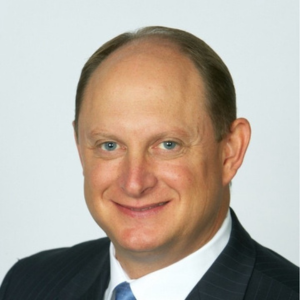
Ed Burnett - Chief of Operations and Security, Cloudastructure - Ed Burnett brings decades of elite security leadership to Cloudastructure. Before joining the company, Ed served as Vice President of Security and Global Fraud Investigations for a Fortune 50 corporation — overseeing security operations and fraud prevention at a scale few professionals ever encounter. He now applies that enterprise-grade expertise to the multifamily industry, helping property owners and operators build security programs that are proactive, intelligent, and built to last
Join the 8 of 10 NMHC top companies that trust Cloudastructure for remote guarding, 24/7 live monitoring, and AI surveillance — with no long-term contracts and a 98% crime deterrence rate.





.svg)
.svg)

.webp)

.webp)