


Blog

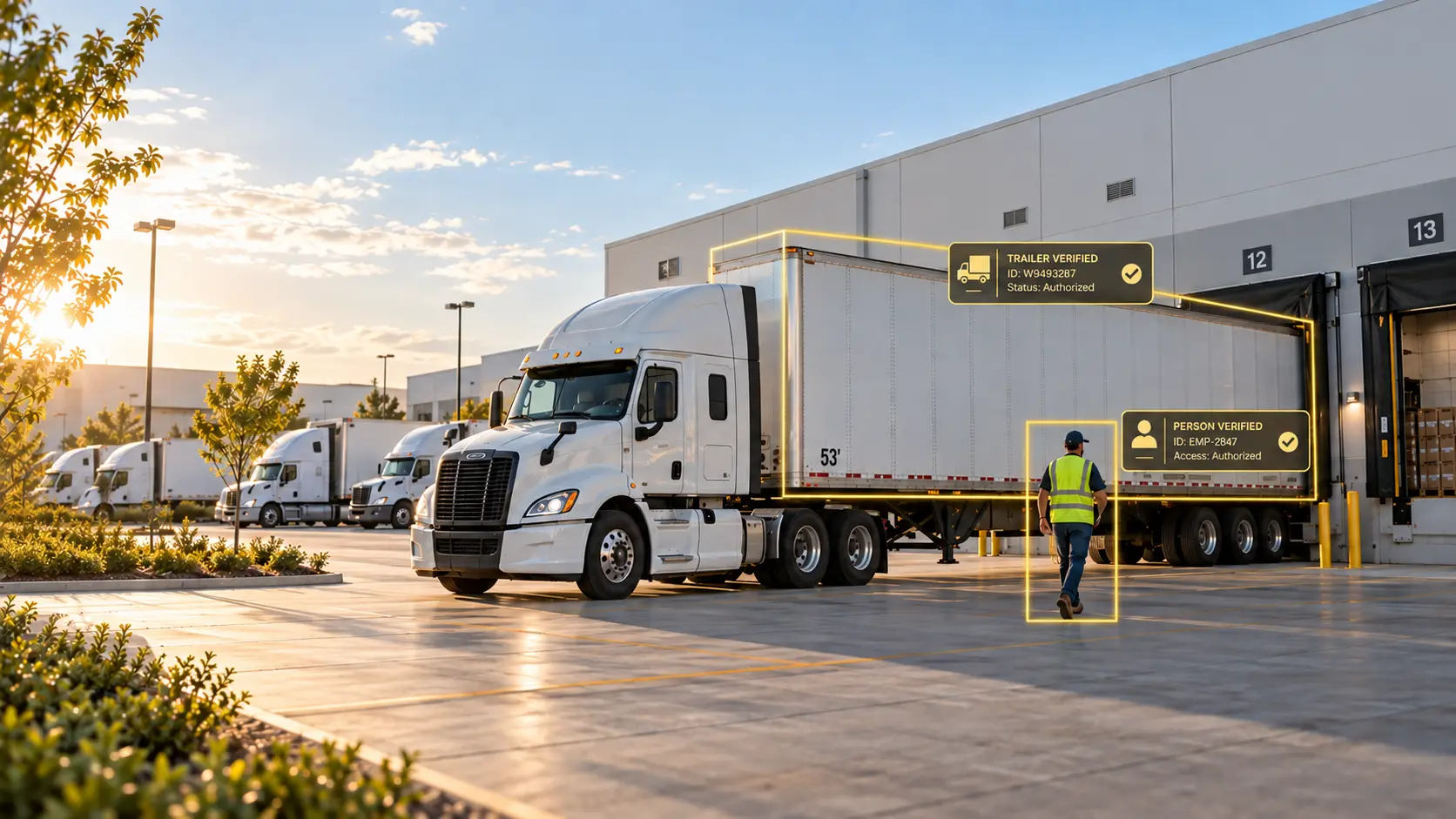
For decades, the freight industry operated on trust and paper: a phone call, a handshake, a bill of lading. Criminals learned to exploit gaps in old school processes long before the industry acknowledged they existed. Today, those same adversaries have graduated to a far more sophisticated playbook. Now our industry is tasked with playing catch-up.
I've worked cargo theft investigations and risk management long enough to watch this cycle repeat itself so many times it almost feels scripted. Criminals identify a gap. They pressure test and exploit it systematically. The industry eventually responds as losses mount and the whole thing starts over. That cycle hasn’t changed, but the speed and sophistication has.
Before most freight brokers had anything resembling a real vetting process, criminal networks were already doing their homework. They were scraping FMCSA public data, cloning legitimate DOT numbers, building convincing fake carrier identities from scratch. This wasn't a few opportunists. It was organized, methodical, and frankly pretty sophisticated for an industry that still thought cargo theft only meant someone cutting a lock on a trailer at a truck stop or stealing the truck while the driver was showering or eating.
At the Transported Asset Protection Association - Americas, we've spent years tracking this shift. Double brokering, fictitious pickups, identity theft schemes — these are just table stakes at this point. The criminal operations running these schemes look more like logistics businesses than they do traditional theft rings. Division of labor, target selection based on commodity value and load timing, awareness of which brokers have loose verification habits. They're running an effective business.
The freight industry was not designed with any of that in mind.
Here's where things get complicated for the people in the middle of the supply chain. The legal expectation of what a freight broker owes to the shipper when something goes wrong has changed considerably. Cases like Montgomery v. Caribe Transport didn't create this trend, but they made it impossible to ignore. Federal preemption, which gave brokers a fairly comfortable legal cushion for years, is no longer the reliable backstop it once was.
Our team at SPG Cargo & Logistics is seeing this story play out pretty clearly. Losses tied to inadequate carrier vetting are substantial and, more often than not, avoidable. The brokers who get hurt worst are usually the ones who had a vetting process in theory, but all too similar to a checkbox exercise in practice. The question isn't whether to vet carriers anymore. That debate's over. The question is whether your process is actually keeping pace with the people trying to game it.
Too often the conversation about AI and cargo theft turns into either a panic or a sales pitch. It's neither. Just like hard locking devices or covert tracking, it's a tool. And like pretty much every tool that's ever existed, it doesn't care who picks it up.
Generative AI has made it meaningfully easier to produce fake documentation that passes a visual inspection, to impersonate a legitimate carrier in a real-time conversation, to find patterns in freight data that identify high-value targets. Criminal networks are not sitting around waiting for the transportation industry to publish best practices on AI adoption before they start using it. That ship has sailed.
So what's the answer? Get better at it faster than they are. That's it, really. Organizations like TAPA AMERICAS spend a lot of time and energy trying to elevate awareness of exactly this — the threat is moving, the tools are available on both sides, and the advantage goes to whoever builds competency first without losing the human touch. Technology deployed thoughtfully, inside a real process with real accountability, makes the people trying to protect freight substantially more effective. Technology adopted as a checkbox exercise, or without human insight and instinct, just creates a new weakness.
There's no version of good freight security that doesn't start with knowing who you're actually handing a load to. The schemes behind most fictitious pickups, double-brokering incidents, and motor carrier number fraud are built on one simple bet: that nobody's going to check carefully enough, at the moment it matters, to catch what's happening.
Modern verification tools have gotten pretty good at closing that gap. Real-time cross-referencing against FMCSA data, anomaly detection in carrier registration patterns, driver identity verification at pickup. None of it is perfect — nothing is — but it raises the cost of pulling off these schemes in ways that matter.
What I'd caution against, though, is the idea that buying the tool solves the problem. I've seen too many operations with solid technology and loose habits. The verification has to happen every time, for every load, with actual accountability behind it. That's less a technology problem than it is a culture problem. And culture problems don't get fixed with a software subscription.
Not every insurance partner is built for the environment we're operating in right now. That matters more than people realize.
The best insurance relationships I've seen in this space go beyond claim processing. A good partner understands the exposure, sees patterns in loss data before they become obvious, and isn't afraid to tell a client when their risk management practices don't match the threat. The freight and cargo insurance market has taken real hits from theft losses in recent years, and it's showing up in coverage terms and pricing. Companies that can demonstrate a willingness to embrace valuable expertise and services like what SPG Cargo & Logistics offers, as well as credible, current vetting practices, are in a different conversation with their insurers than those that can't.
I'm not pessimistic about where this goes. The freight industry has smart, committed people working on these problems, and the technology available to carriers, brokers, and shippers is genuinely better than it's ever been. What we need now is the organizational will to actually use these tools — consistently, seriously, as a matter of course rather than a response to the last bad incident.
TAPA AMERICAS and the broader supply chain security community exist to keep raising that standard, to share intelligence across the industry, and to push for the kind of coordinated response that individual companies can't mount on their own. The more our industry can dovetail efforts — with the help of law enforcement and government agencies — the better our odds of making progress in this fight.
.webp)
Scott Cornell joins California Trucking Association CEO Eric Sauer, CargoNet VP Sal Marino, and Cloudastructure Chief Security & Operations Officer Ed Burnett for a live conversation on where AI actually helps in the fight against cargo theft, and where it doesn't.
Can AI Stop Cargo Theft?
Thursday, September 24, 2026 · 12:00 PM ET / 9:00 AM PT
Free, in association with the California Trucking Association
.png)
About the Author: Scott Cornell. SVP, Crime & Theft Specialist. SPG Cargo & Logistics
Scott Cornell is a nationally recognized expert on cargo theft, transportation risk and organized crime, with more than 25 years of experience in investigations and transportation insurance. Before joining LogistIQ, he spent 25 years at Travelers, where he led the Transportation and Inland Marine division and helped create the insurance industry's first dedicated cargo-theft investigative unit. A frequent speaker and media commentator, Cornell has appeared on CBS, NBC, CNBC, MSNBC, Vice TV and Yahoo Finance, and has been recognized with the 2024 Pharmaceutical Cargo Security Coalition Award and named to the 2025 Top 100 Insurance Executives list. He also serves as Chair of TAPA Americas.





.svg)
.svg)

.webp)

.webp)

An intimate sunset gathering for property management leaders and industry partners. Space limited to 75 guests.
RSVP Now →