



By Megan Davidson, ARM, Senior Vice President, Alliant Insurance Services
As the number of older adults living in multifamily housing continues to grow, property owners and managers are facing a changing set of safety, liability and risk-management challenges.
A senior resident may experience a fall. A family member may ask for information that property staff cannot legally provide. A resident may need a reasonable accommodation. Or a well-intentioned employee may try to help in an emergency and inadvertently create a new liability concern.
These situations raise an important question for owners and property managers:
What can you do to protect senior residents while also protecting your property, your staff and your company?
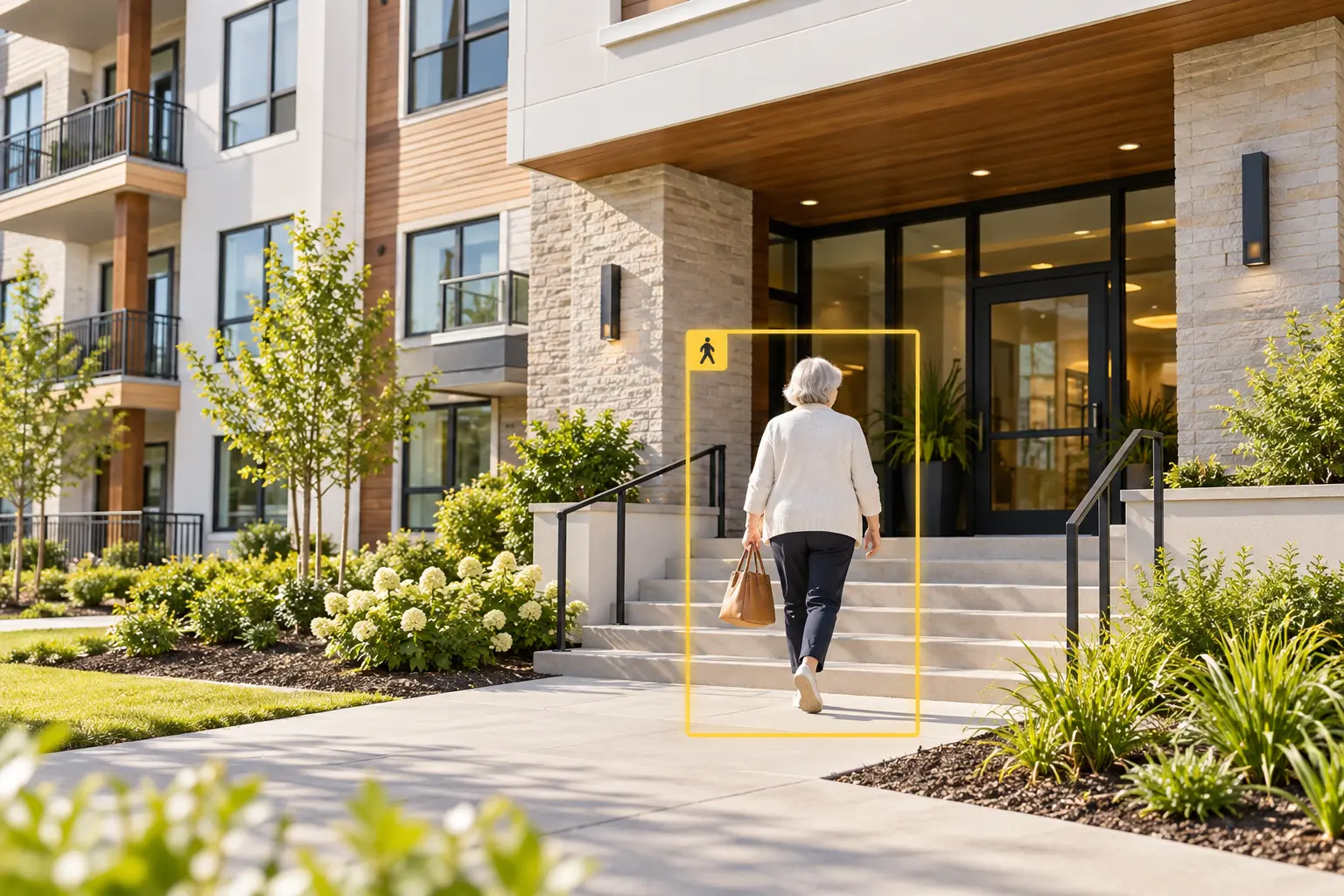
Recently, a senior resident was walking toward his apartment building, reached the two-step entrance, climbed the two steps—unsteadily, holding on to the handrail—and fell backwards. This resulted in a head injury and a lawsuit. Sadly, the gentleman passed away.
What does this mean for the owner and managers of the building?
A lawsuit was filed while the resident was still alive. Both the owner and management company were named in the suit.
Does this sound familiar?
It could happen in any city or any state.
Slip-and-fall incidents are a significant source of liability claims at senior properties. What is different about this case? There was clear video footage from outside the building demonstrating that there was a handrail, the weather was dry, there were no apparent hazards, and that the resident lost his balance rather than being tripped by negligence on behalf of a third party.
That documentation can be critical when an incident becomes a claim.
According to the Census Bureau, by 2030, roughly one in five Americans is projected to be 65 or older, and by 2034 older adults are projected to outnumber children under 18 for the first time. And as senior living becomes increasingly expensive, property owners and managers need to think carefully about what happens before, during and after an incident.
If someone comes across a resident or guest who has fallen and needs assistance, what is the proper response?
Should a staff member instantly help them up, call for assistance, or...?
Good Samaritan laws vary by state, and the way they are enforced can also depend on the “Samaritan's” relationship to the property and the potential injured party.
For property managers, the question is not simply whether someone wants to help. It is also understanding what responsibilities the property has, what employees are trained to do, and whether informal practices could create additional exposure.
Another key issue in senior housing can be Fair Housing complaints.
Often, as cognition may decline, there is a perception that a resident is being treated differently because of their background. Being keenly aware of this, as well as ensuring that accommodation requests are documented and addressed in as timely a manner as possible, are key.
What is the owner or management company responsible for providing?
Who is responsible for paying?
These questions can become particularly important when a resident needs an accommodation or modification.
When a senior member of the family enters either senior housing or assisted living, families are understandably concerned regarding their well-being.
How is the operator of that property handling those inquiries?
Do they have signed agreements from their residents to disclose personal health information?
Are on-site staff educated on whether they are able to release that information?
A concerned family member may call with very real concerns about a parent. That does not necessarily mean property staff are authorized to provide information about the resident.
Having clear policies and educating staff about what they can and cannot disclose can help property teams respond consistently.
An additional concern is the abuse of seniors and by seniors.
As folks are living longer, their physical health may outlive their mental health, resulting in what can be characterized as aggressive behavior. This can be demonstrated in actions against domestic partners, guests or staff.
Is there de-escalation training in place to deal with this possibility?
Further, seniors can be vulnerable to abuse from various sources. What is in place to safeguard a senior population?
How secure are the premises?
How well lit are hallways, parking lots and building exteriors?
Are there cameras in place to record any events that may happen?
Insurance is a backstop when all else fails.
Understandably, everyone would prefer to avoid a claim rather than deal with the aftermath.
Working with a broker who has the expertise and breadth of insurance markets to address all your needs—and work with you on options specific to your properties—is key.
When—or if—an incident happens, what should you do?
The first response is to deal with the immediate situation. If someone needs help, call 911.
Next, clearly document all details—including who else is present.
Have a formal incident reporting process with a standard form. Ideally, this would be available online, so it could even be completed on a cell phone.
If no one else was present, document that as well.
Is there video? Preserve it.
If there are no videos, take photos and preserve them.
Memories fade, so swift, dated documentation is key.
With any luck, we're all going to be seniors one day ourselves. We want to treat seniors how we'd like to be treated—with dignity, respect and compassion. And at the same time, we have a responsibility to protect the people who live in our communities and the properties we manage.
.png)
If you are interested in learning more about what can be done to safeguard your properties, please join us on Wednesday at 12:00 p.m. ET / 9:00 a.m. PT for our webinar, Seniors, Safety & Liability in Property Management. We hope to answer your questions and provide information that helps keep your properties safe for your valued residents.
.webp)
About Megan Davidson, ARM. Megan Davidson, ARM, is Senior Vice President at Alliant Insurance Services, one of the largest insurance brokers in the United States. Megan works with multifamily and real estate clients on insurance, liability and risk-management strategies. Alliant represents more than 2.5 million multifamily units and over 1 billion square feet of commercial real estate, giving its team deep experience in the unique insurance and risk-management challenges facing property owners, managers and developers. With more than 15,100 employees and majority employee ownership, Alliant has built its business through organic growth, a client-first approach and an investment in experienced talent. The company maintains a 99% employee retention rate and has been recognized among America’s Best Large Employers based on employee satisfaction.





.svg)
.svg)

.webp)

.webp)