



.webp)
Security patrols are essential for property safety—but they’re becoming more expensive. On-site guards, vehicle patrols, and static posts require significant labor, overtime, and benefits, and the coverage gaps often leave properties exposed.
In many urban areas, police response is prioritized for life-threatening events, meaning lower-risk incidents like trespassing, package theft, or lease violations may not get immediate attention. Property teams are often left to manage these risks themselves.
The question for property managers is clear: how do you maintain safe, secure properties while controlling patrol costs? The answer lies in remote guarding.
.webp)
Effective remote guarding services combine:
Unlike traditional cameras, remote video guarding is proactive. Remote guards can issue live voice-down warnings, document incidents, and escalate issues when necessary—helping prevent theft, vandalism, and unsafe behavior before it happens. And, at least here at Cloudastructure, deter 98% of such events before disaster or loss occurs.
.webp)
Many properties have successfully reduced on-site guard hours by up to 40% by integrating remote guarding.
This doesn’t have to mean removing guards entirely. Remote monitoring can be used to reduce those costs while simultaneously filling coverage gaps, especially during nights, low-traffic periods, or in areas where incidents are frequent but police response is slow.
The result: significant cost savings while maintaining—or even improving—overall property security.
Understanding On-Premises Guard Costs
On-site security can be a major operating expense:
A single full-time unarmed guard working 40 hours per week costs over $62,000 annually—before overtime, weekends, or holiday shifts - and then there’s the equipment, benefits, and insurance premiums. By reducing patrol hours by up to 40%, operators can achieve substantial savings, which can be reinvested in safety or amenities.
To learn more about how Remote Guarding can save you money, check out our ROI calculator.
AI-powered cameras and security analytics make remote guarding effective:
With this approach, properties can enjoy continuous, proactive surveillance without the costs of full-time patrols at every site. You’re upgrading effectiveness while reducing costs.
The most important benefit of remote guarding is intervention in real time:
By preventing incidents, operators reduce repair costs, insurance claims, and resident complaints—while also improving property reputation.
Liability and risk stem from unmanaged incidents, not from cameras themselves.
Remote guards provide real-time intervention and maintain detailed, auditable logs of all activity. This gives property teams visibility, supports enforcement of community rules, and ensures a documented record if an incident does occur.
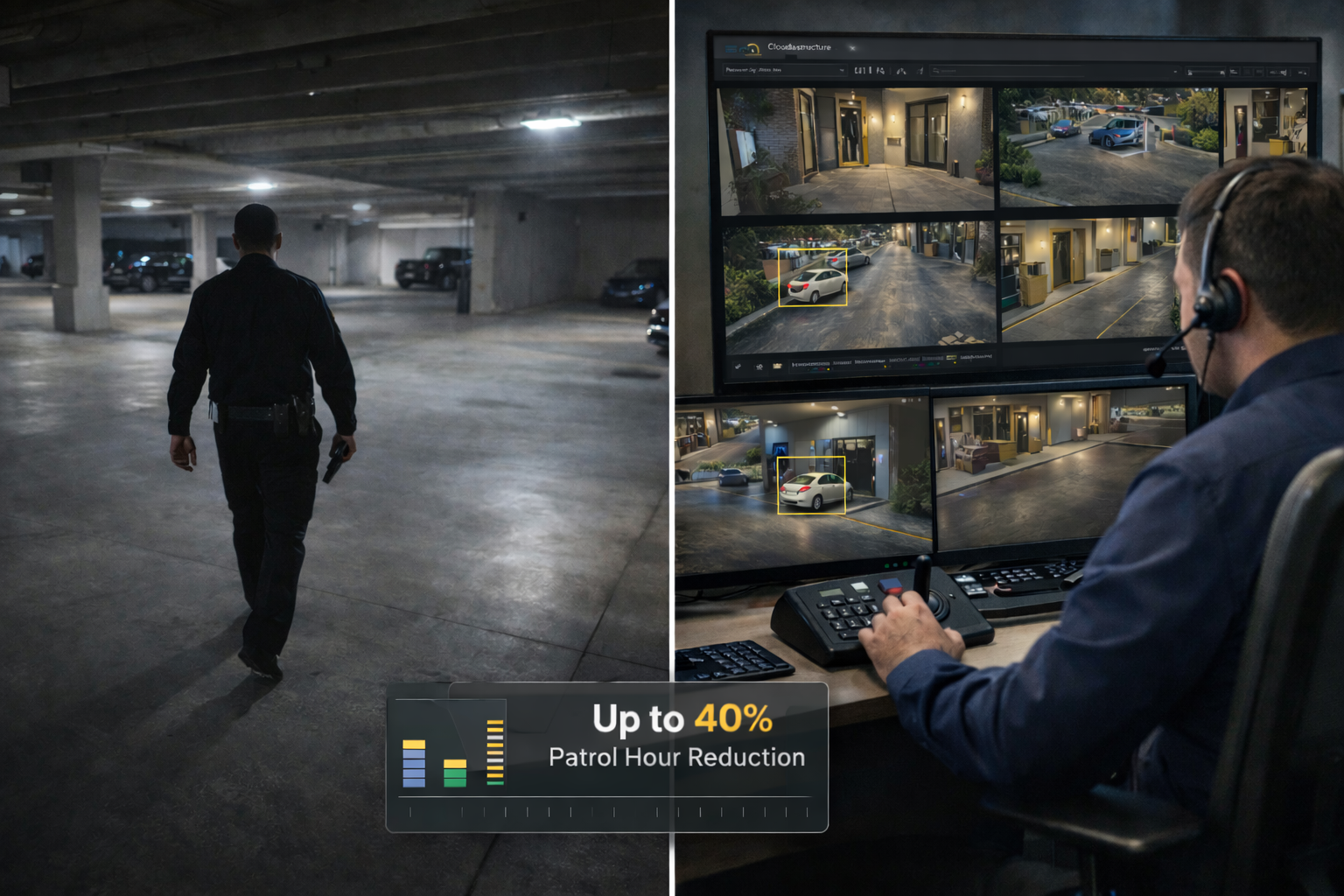
The difference isn’t removing people—it’s using technology to maximize coverage and efficiency.
Remote guarding is particularly effective for:
In these environments, remote monitoring and live intervention help prevent incidents before they escalate—reducing patrol costs while improving overall safety.
Remote guarding services provide a cost-effective, proactive approach to property security:
In urban properties where incidents can be frequent and police response slow, remote guarding offers a smarter, safer way to protect people, property, and your budget.





.svg)
.svg)

.webp)

.webp)